Table of Contents
ToggleIf you’ve spotted ants marching across your kitchen counter, you’re probably wondering: how much does pest control for ants actually cost? The answer isn’t simple, pricing varies wildly depending on where you live, how severe the infestation is, and whether you hire a professional or go the DIY route. In 2026, homeowners are paying anywhere from $150 to $1,500+ for professional ant control, with most settling somewhere in the middle. This guide breaks down what you’ll actually spend, what drives those costs up or down, and whether tackling it yourself makes financial sense for your situation.
Key Takeaways
- Professional pest control for ants typically costs $200–$400 for an initial treatment, with follow-ups ranging from $150–$300 per visit, or $1,200–$1,500 annually for ongoing monitoring plans.
- Pest control costs vary significantly based on infestation severity, ant species (carpenter ants cost more than common household ants), home size, and location, with regional differences of 15–25% depending on your area.
- Structural treatments for carpenter ants and fumigation can exceed $400–$800+, while perimeter sprays remain the most affordable option at $150–$250.
- DIY ant control solutions like gel baits or perimeter sprays cost only $20–$100 but require patience and correct placement; hire a professional for severe infestations, carpenter ants, or if DIY methods fail after 2–3 weeks.
- Package deals offering 10–20% discounts on multiple treatments upfront and quarterly service plans often deliver better long-term value than paying for individual emergency treatments.
Average Pest Control Pricing For Ant Infestations
Professional pest control for ants typically ranges from $150 to $500 for a single treatment of a typical residential home. That initial visit, what most companies call a “standard service call”, usually covers inspection, identification of ant species, and treatment application. But, that’s just the first step. Most ant infestations require follow-up visits spaced 2-4 weeks apart, which adds another $100-$300 per visit. If you’re signing up for ongoing monitoring (often called quarterly or monthly service plans), you’re looking at $1,200 to $1,500 annually.
According to recent data, the average homeowner pays between $200 and $400 for the initial professional treatment. The average cost to get rid of ants typically breaks down to $250 for a single service call with follow-ups ranging from $150 to $300 each. Some companies offer package deals: paying upfront for three or six treatments can knock 10-20% off the per-visit cost. If you’re comparing quotes, that’s the number to watch, it’s often where the real savings hide.
The wide range reflects real differences in how companies operate and what they’re treating. A small efficiency apartment with a surface-level ant problem costs less than a 3,000-square-foot suburban home with carpenter ants nesting in the walls. Budget accordingly: if a company quotes you $100 for ant control, it’s either a very small space or they’re using cheaper methods (which sometimes means fewer guarantees). If they’re quoting $1,000, confirm whether that’s a one-time treatment or a full season’s monitoring plan.
Factors That Impact Your Ant Control Costs
Infestation Severity And Treatment Type
Not all ant problems are created equal, and your bill will reflect that. A handful of common household ants (the kind you see trailing across your sink) costs far less to treat than carpenter ants or fire ants that have established colonies inside walls or the foundation. When pest control technicians arrive, they’re diagnosing severity: Are the ants confined to the kitchen, or have they spread throughout the house? Is it a single visible nest or multiple satellite colonies?
Treatment type drives pricing too. Perimeter sprays (applying liquid pesticide around the foundation and entry points) are the most affordable option, typically $150-$250. Interior gel bait stations are more precise and often more effective but cost a bit more. Structural treatments, drilling into walls to reach hidden carpenter ant nests, jump the price to $400-$800+ because they require time and specialized techniques. Fumigation (sealing and treating an entire room or structure with gas) is rare for ants but can exceed $1,500 if necessary.
The ant species matters too. Pest control strategies differ significantly depending on whether you’re dealing with pavement ants, pharaoh ants, or aggressive fire ants. Your pest control company should identify the species before quoting, if they don’t ask, ask them. The wrong treatment wastes your money.
Location, Home Size, And Service Frequency
Where you live is a huge cost driver. Pest control in urban areas or regions with year-round pest seasons (the South, for instance) tends to run 15-25% higher than rural or seasonal markets. Travel time matters, a technician driving 30 minutes costs more than one five minutes away. Regional labor costs are built into pricing, and they vary significantly. A $300 treatment in suburban Texas won’t be the same price as the same service in Seattle.
Home size is straightforward math: larger homes cost more to treat. A 1,000-square-foot apartment might run $150-$200 per visit, while a 4,000-square-foot house with a basement and attic could be $400-$500. The technician is covering more ground, applying more product, and spending more time on-site.
How often you need service depends on the infestation and your local climate. In warm climates, ants are active year-round, so quarterly treatments ($600-$800 annually) are standard. In cooler regions, you might get away with two spring/summer visits ($300-$400 total). Ongoing prevention plans sound expensive upfront but often save money long-term by catching reinfestation early. Most companies guarantee their work for 30-60 days after treatment, so if ants return, you get a free retreat, but only if you’ve signed on for their monitoring program.
DIY Ant Control Versus Professional Services
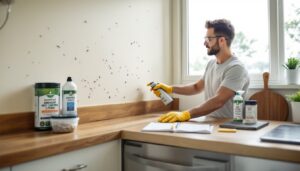
You can treat ant problems yourself for far less money, often $20-$100 depending on what you buy, but success depends on your tolerance for trial and error. DIY ant baits (gel, liquid, or powder formulations) work when you place them correctly and wait for the slow kill cycle. Popular over-the-counter options like Terro liquid baits or Advion gel average $10-$30 per box and can handle small to moderate infestations if you’re patient. The catch: ants need to return to the colony and share the poison before the whole nest dies, which takes 3-7 days. During that window, you’ll see more ants, and many homeowners panic and spray, which stops the bait from working.
Perimeter sprays are also DIY-friendly if you’re comfortable applying pesticide around your home’s foundation and entry points. Essential pest control tools for DIY treatment include a pump sprayer, safety gloves, and eye protection. A gallon of perimeter spray runs $15-$40 and covers about 2,000 square feet. If you own a small house, this can solve the problem for under $50. If you’re wrong about where the nest is or which ant species you’re fighting, you’ll spend money and still have ants, then call a professional anyway.
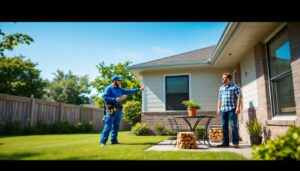
Hire a professional if: the infestation is severe (ants in multiple rooms or visible inside walls), you’ve tried DIY for 2-3 weeks with no improvement, or it’s carpenter ants or fire ants. These species are harder to eradicate and cause structural or safety risks. Professionals have access to stronger baits, can identify nesting sites you might miss, and usually back their work with a guarantee. Pest control for beginners often works fine for occasional scout ants, but established colonies warrant professional help.
The math: A $250 professional treatment versus a $50 DIY attempt that fails means you’ve wasted $50 and still owe $250, totaling $300. Get it right the first time when the infestation is bad. For small, early-stage problems, DIY is worth the experiment. You can always escalate to a professional if needed. Many homeowners find the sweet spot is using best pest control strategies tailored to their specific situation, DIY prevention and early intervention, professional services when it gets serious.
Conclusion
Ant pest control costs are reasonable and predictable if you understand what drives the price. Expect $200-$400 for a professional initial treatment, with follow-ups at $150-$300 each. Your actual bill depends on the ant species, infestation scope, your location, and home size. DIY options save upfront costs but risk failure: professionals offer peace of mind and guarantees. Use HomeAdvisor or Angi to get local quotes, ask contractors about their follow-up policies, and don’t assume the cheapest option is the best. When ants become a recurring problem, a quarterly service plan often costs less than repeated emergency calls and keeps your home protected year-round.